Where the word catacomb comes from
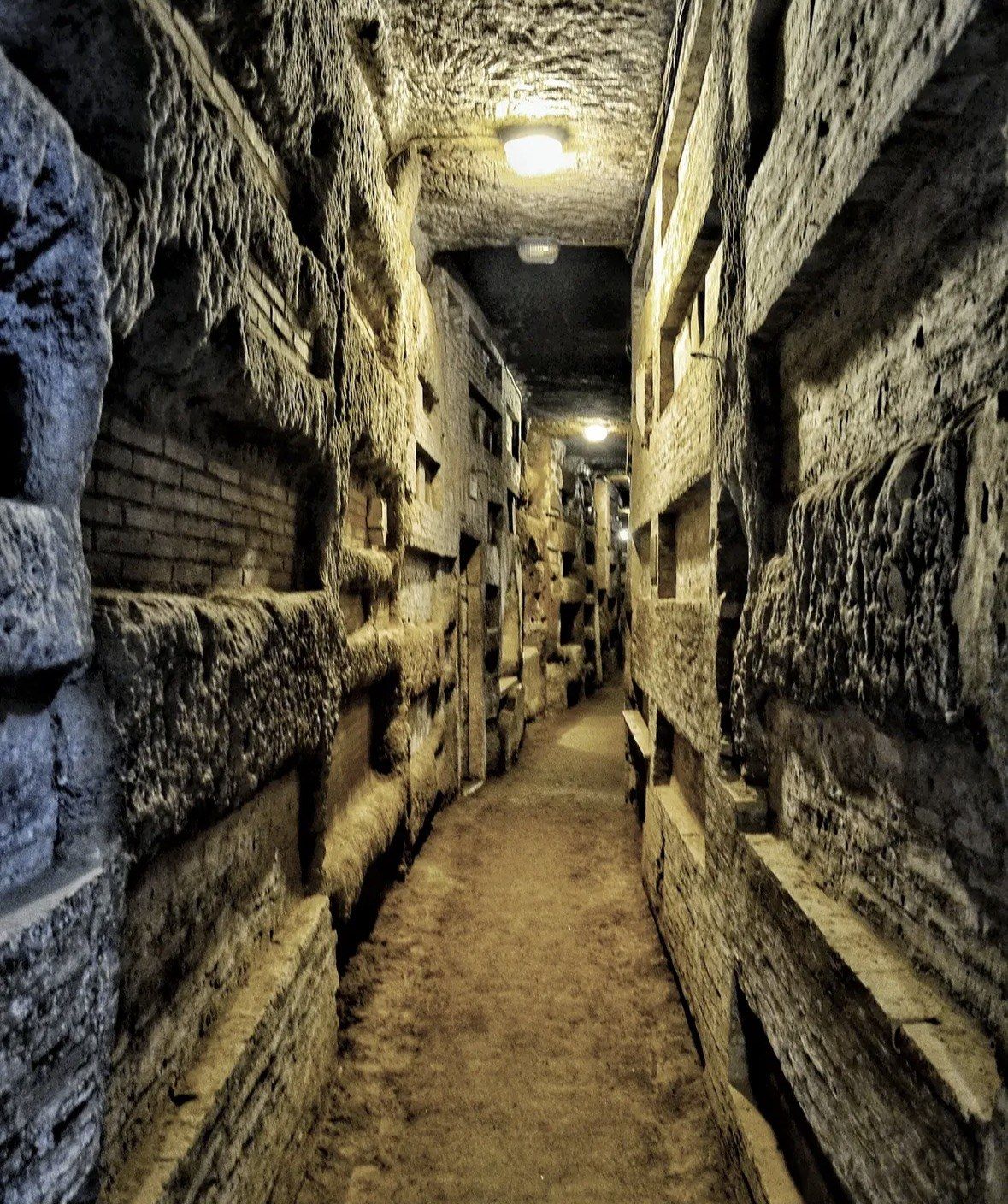
Catacomb, as a word, comes from one specific place on the Via Appia Antica. Ground there was worked as a pozzolana quarry known as the site "ad catacumbas", and the Christian cemetery that grew in the hollow is now the Catacomb of San Sebastiano, which handed the term to every other burial complex in the world. Christian digging began earlier than most visitors assume. Domitilla dates back to 120 AD, among the earliest Christian burial complexes in Rome, and San Callisto originated in the middle of the second century. Diggers worked with one method, simple and endlessly repeatable: loculi cut lengthwise into the tufa walls and closed with marble slabs or bricks, with arcosolia and family cubicula for those who could afford them.
San Callisto became the official cemetery of the Church of Rome in the third century, and the scale followed the status. Diggers took the galleries down four levels, more than 20 metres deep, reaching roughly 19 km (12 miles) of corridors across about 90 acres. Around half a million Christians were buried there, including dozens of martyrs and 16 popes. At the centre of the complex is the Crypt of the Popes, the official burial place of nine popes and probably eight dignitaries of the third-century Roman Church, which earned it the nickname "the little Vatican". Greek inscriptions for Pontianus, Antherus, Fabian, Lucius and Eutychian survive on its walls, and Pope Sixtus II, a victim of Valerian's persecution, lies in the front wall.
Frescoes, pilgrim graffiti and the people buried here
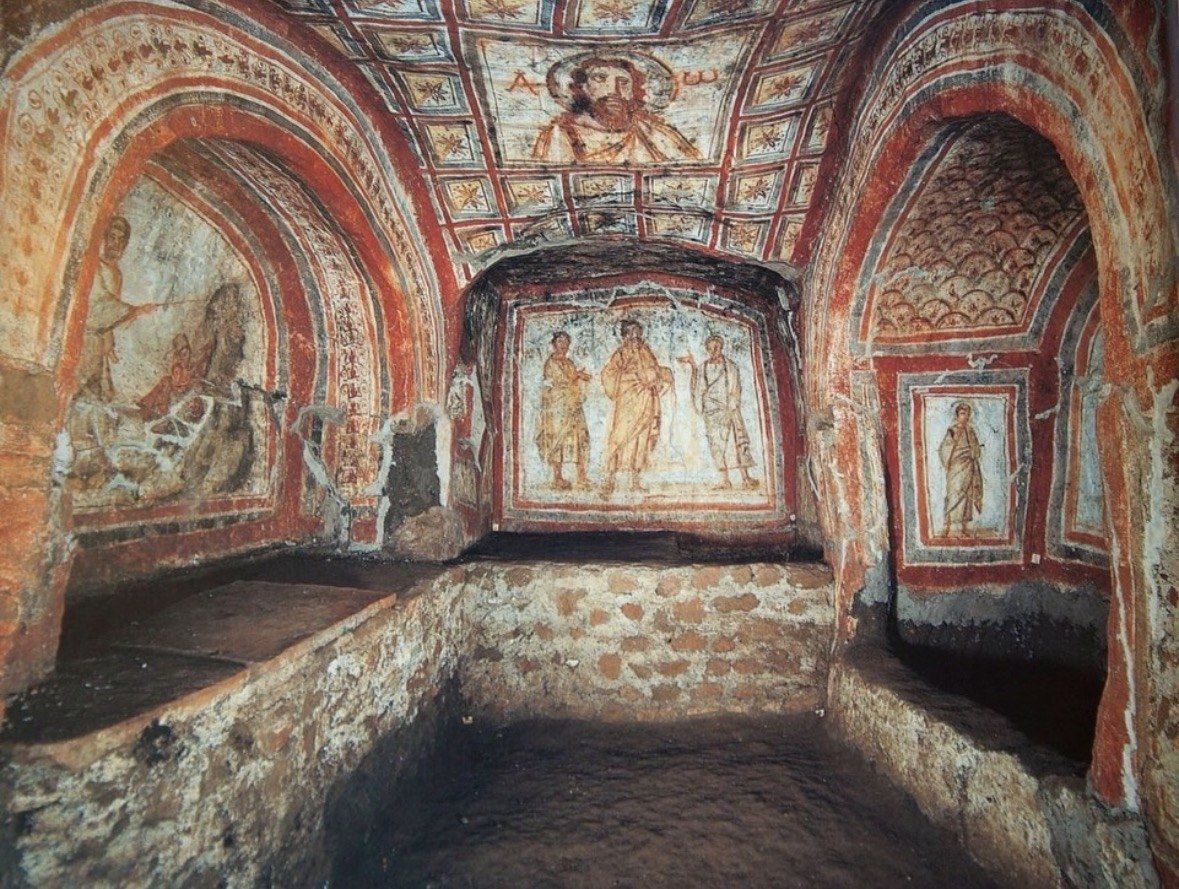
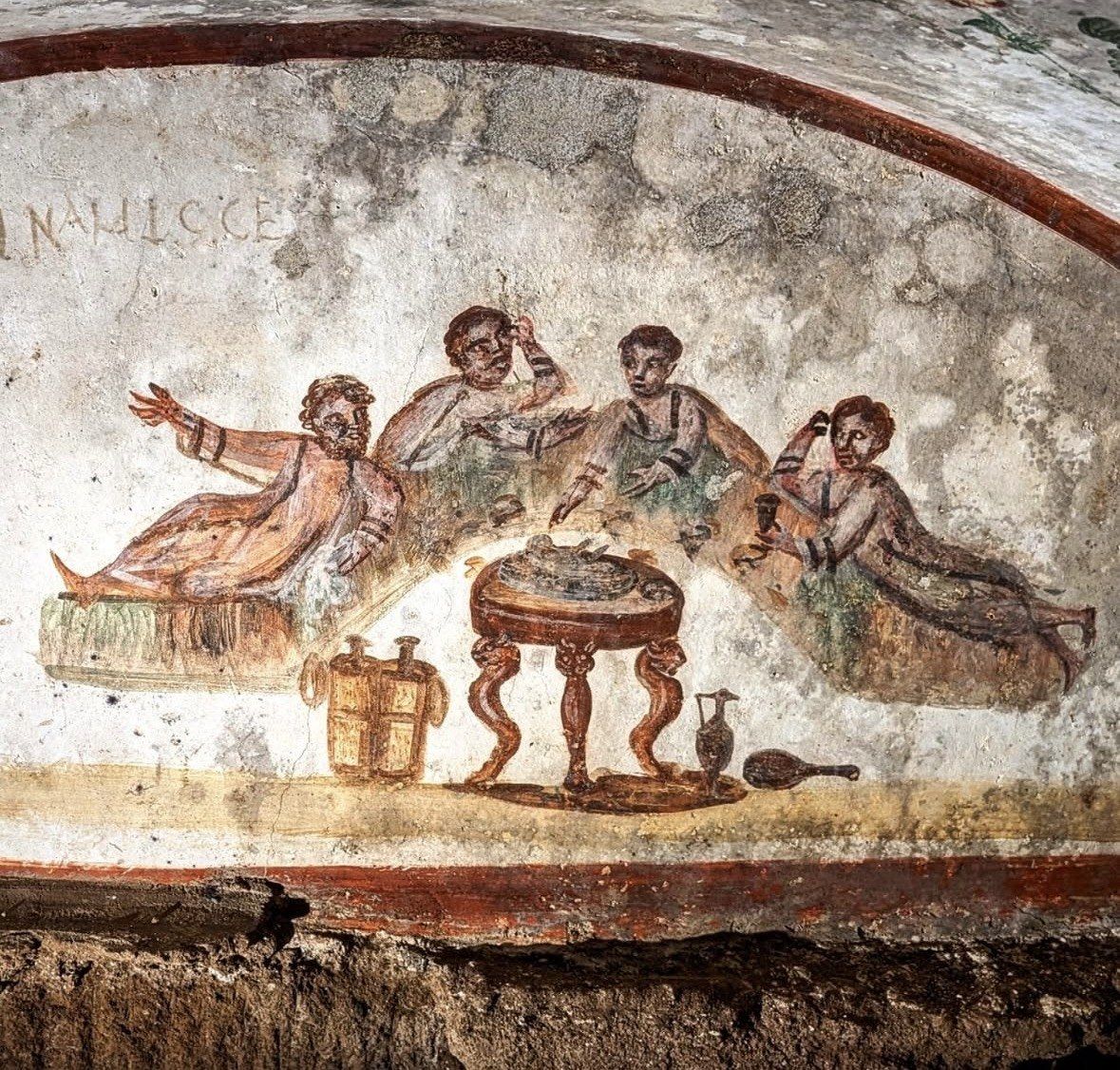
Priscilla, on the Via Salaria north of the centre, holds the painting usually called the oldest known image of the Virgin, dated to about 230–240. The standard route there also takes in the Cubicolo della Velata, the cryptoporticus and the Greek Chapel with its Susanna, Adoration of the Magi and Fractio panis panels. Two levels of galleries run for over 13 km and hold thousands of burials, among them seven popes. Pope Sylvester, elected in 314, lies under the excavated foundations of the basilica of San Silvestro. Visits last about 45 minutes and are capped at 25 people, which keeps the painted chambers quiet even in high season.
Devotion is written on the walls at San Sebastiano. The mid-third-century Memoria Apostolorum and its triclia, a covered hall with benches, carry pilgrim graffiti including the invocation "Paule et Petre petite pro Victore", and many scholars hold that the remains of Peter and Paul were kept there temporarily. The complex runs about 12 km of tunnels on three levels, reaching up to 18 metres underground, and its deepest section includes a second-century pagan necropolis with three mausoleums. St Sebastian's own relics are kept at the altar dedicated to him in the basilica above, together with his martyrdom arrow and part of the column of his martyrdom; his crypt is shown on the guided visit below.
Rome has no single catacomb. The Pontifical Commission for Sacred Archaeology lists exactly seven open to the public: San Pancrazio, Priscilla, San Sebastiano, Domitilla, Sant'Agnese, San Callisto and Santi Marcellino e Pietro. Only three of them sit on the Appia Antica strip. Sant'Agnese on Via Nomentana grew around a martyr who died at about the age of twelve, buried in a gallery roughly six metres below the present road surface. Santi Marcellino e Pietro on the Via Casilina covers about 18,000 m² with an estimated 15,000 third-century burials; the two martyrs were beheaded in Rome about 304 AD, and a Roman woman named Lucilla moved their remains to the ad Duas Lauros site that took their name.
Interesting facts about the Catacombs of Rome
19 km
Galleries on four levels at San Callisto, over 20 metres deep
16
Popes buried in the Catacomb of San Callisto
120 AD
Date of the Catacombs of Domitilla, among Rome's earliest
230–240
Date of the oldest known image of the Virgin, at Priscilla
7
Roman catacombs listed as open to the public
2,300
Approximate age in years of the Via Appia Antica
From rediscovery to the open-air museum on the Appia
Appia Antica is about 2,300 years old. It started at Porta Capena near the Circus Maximus and ran south to Capua and then Brindisi. In the mid-nineteenth century, under Pope Pius IX, the road was turned into an open-air museum, which is why the catacomb entrances still stand among tombs rather than in a modern suburb. A copy of the first milestone is set into the wall just outside Porta San Sebastiano on the right, one Roman mile measuring about 1,480 metres from Porta Capena. Expect no ancient roadway in the first four kilometres; the long preserved stretch of basolato begins at the junction with Via Ardeatina, near the church of Domine Quo Vadis at Via Appia Antica 51.
Monuments along that stretch date from either side of the catacombs. The Mausoleum of Cecilia Metella was built between 30 and 10 BC at the third mile for a noblewoman probably the daughter-in-law of Marcus Licinius Crassus, and the ox-skull frieze on it gave the area the name Capo di Bove; at the start of the fourteenth century the Caetani family wrapped the Castrum Caetani around it, with walls, a church, a palace and a tower raised on top of the Roman drum. Further out stands the villa attributed to Maxentius, emperor from 306 to 312, with the only Roman circus preserved in all its architectural components and still retaining its central spina. Casal Rotondo dates from the late first century BC.
None of these catacombs is run as a state museum. San Callisto belongs to the Administration of the Patrimony of the Apostolic See, is governed and conserved by the Pontifical Commission for Sacred Archaeology, and the Salesians of Don Bosco have handled reception and guided visits there since 1930. Domitilla is looked after by the Missionaries of the Society of the Divine Word on behalf of the same commission, Priscilla by the Associazione Pro Deo et Fratribus – Famiglia di Maria, and San Sebastiano marks 200 years of Franciscan presence. The Jewish hypogeum at Villa Torlonia on Via Nomentana, two originally separate catacombs later joined by tunnels, was excavated from 1918 and cannot be visited; Vigna Randanini, at Via Appia Antica 119, opens only on special occasions.
The Catacombs of Rome today
Every visit is a guided visit with the site's own staff, and nobody walks the galleries alone. San Callisto sends groups down every 30 minutes for about 40 minutes, within two fixed windows, 09:00–12:00 and 14:00–17:00, with the last morning departure at 12:00. San Sebastiano runs continuously, Tuesday to Sunday 09:15–17:15 with last admission at 16:45 and visits of about 40–45 minutes. Domitilla publishes the widest language range on the Appia: Italian, English, German, Spanish and French, with Polish and Portuguese on request. Underground conditions stay at about 16 °C with high humidity at San Callisto and around 13 °C at Priscilla, so carry a layer even in August. Photography and video are not allowed inside.
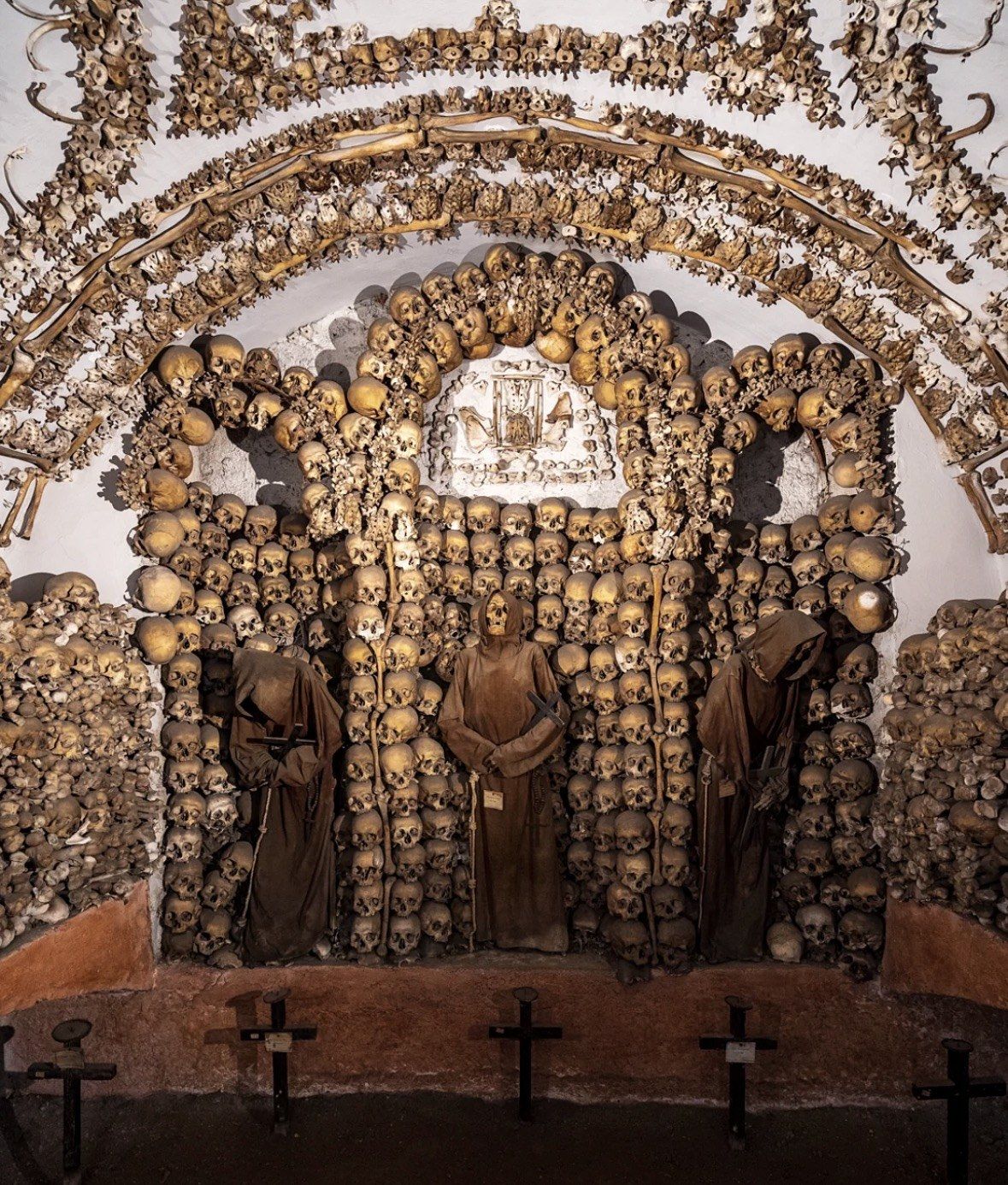
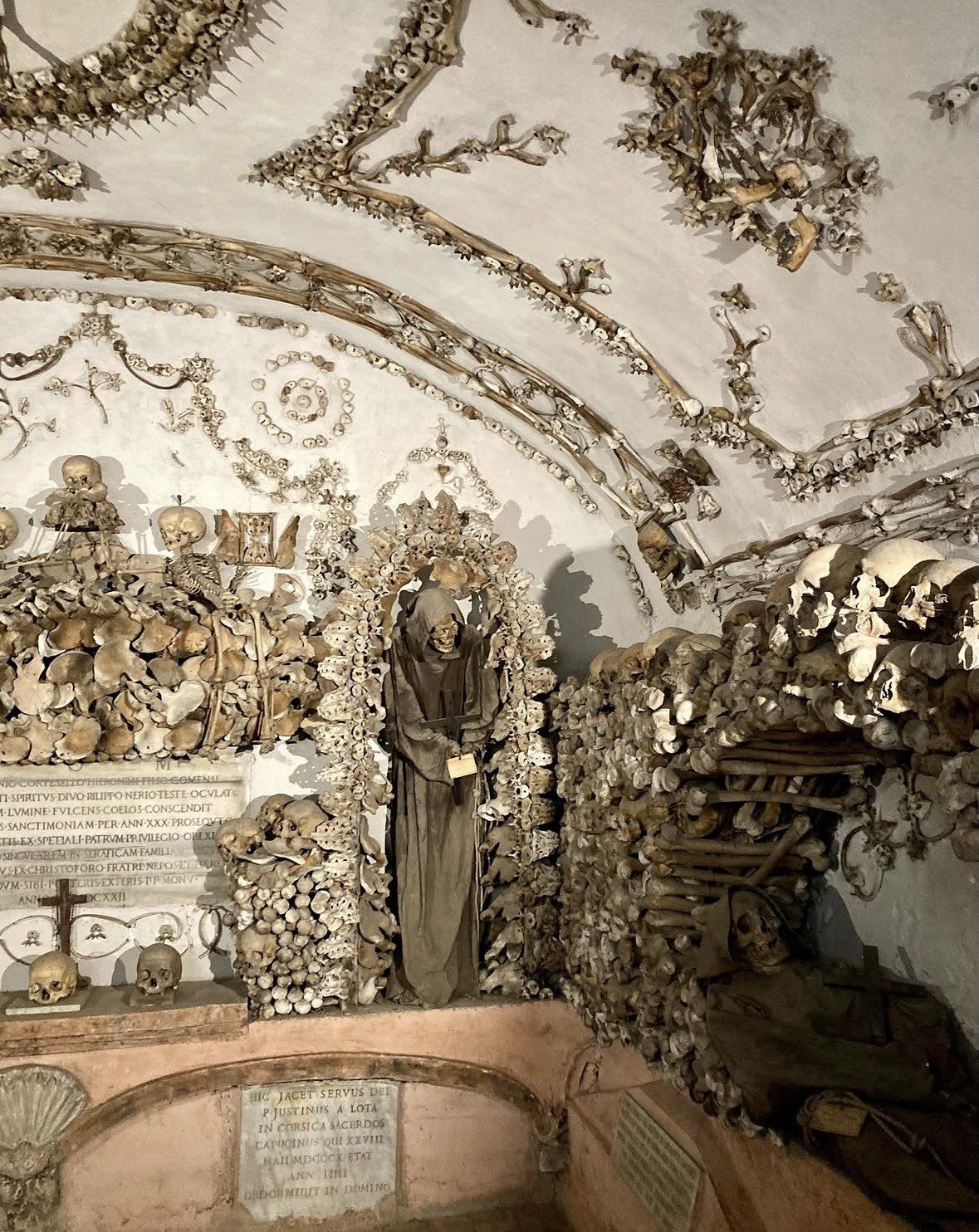
Plan the day around the closing days, because they deliberately do not align: San Callisto closes on Wednesdays, Domitilla on Tuesdays, San Sebastiano and Priscilla on Mondays. The descents are physical, roughly 50 irregular steps down and back up at San Callisto and about 70 at San Sebastiano, with no lift and no seating, and wheelchairs cannot enter because of the architectural barriers. If stairs or tight spaces are a problem, the Capuchin Crypt at Via Vittorio Veneto 27 has only three low steps and opens every day 09:30–13:30 and 14:30–18:30, with the remains of almost 4,000 friars who lived between 1500 and 1800. The tours on this site combine the underground with the Appia, the aqueducts and that bone crypt.