In shortMost of Rome's catacombs lie south of the city walls, along the Via Appia Antica and the Via Ardeatina. The San Callisto entrance and ticket office is at Via Appia Antica 110, with San Sebastiano and Domitilla on the same strip. Priscilla is the exception, on the Via Salaria north of the centre. From the centre it is one metro leg plus one bus.
7catacombs open to the public
Via Appia Antica 110San Callisto entrance
Via Ardeatina 174parking in front of the gate
3rd mileCecilia Metella on the Appia
Where the catacombs in Rome are
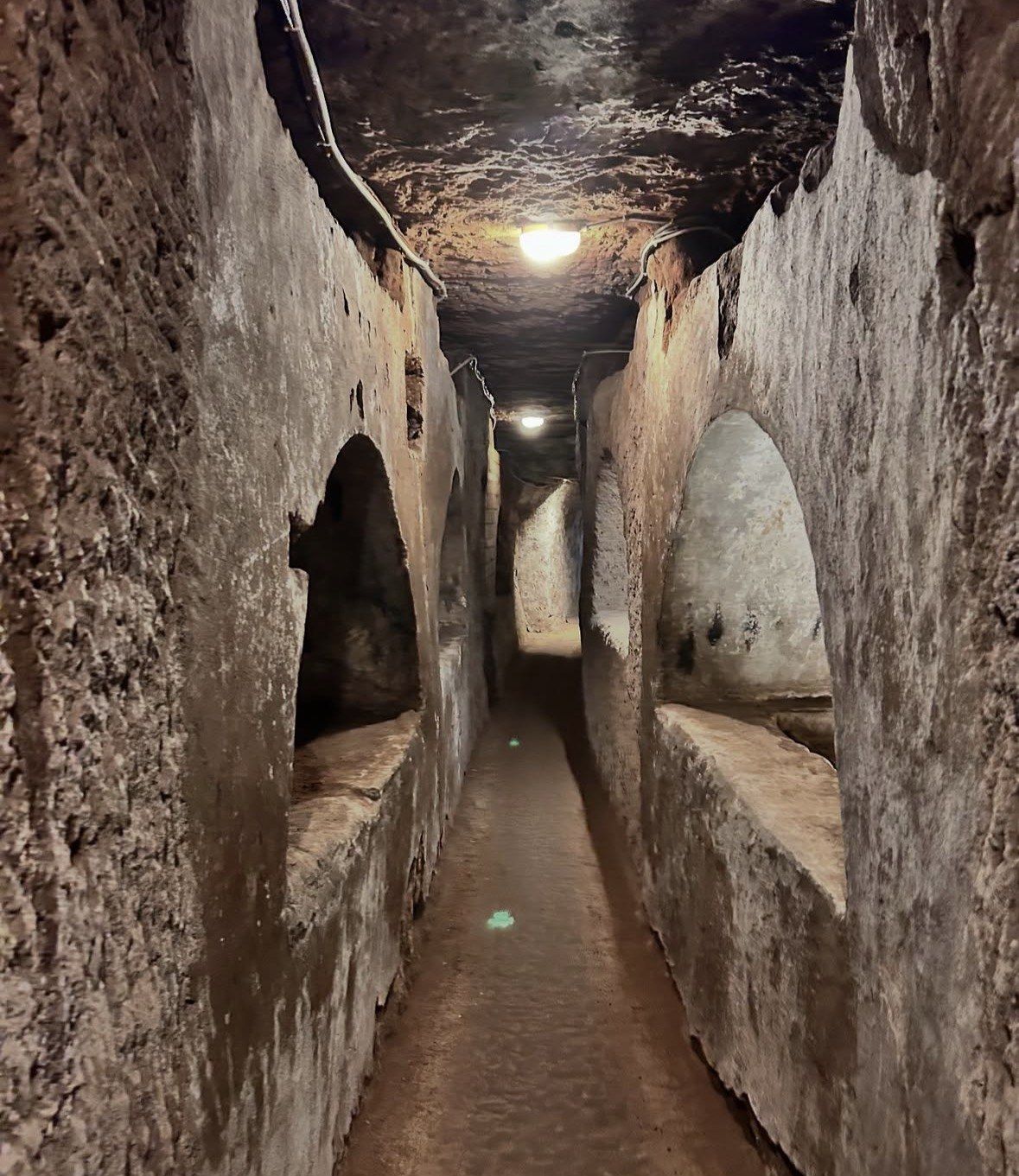
The burial complexes were dug outside the inhabited city, which is why none of them is in the centre you are walking around. The main cluster sits a short way south, where the Via Appia Antica and the Via Ardeatina run out of town: San Callisto, San Sebastiano and Domitilla are all on that strip, within sight of each other's fields and walls. The Pontifical Commission for Sacred Archaeology lists seven Roman catacombs as open to the public, and only those three are on the Appia Antica.
The other four are scattered on their own consular roads, in completely different directions. Priscilla is north of the centre on the Via Salaria, Sant'Agnese is on the Via Nomentana, Santi Marcellino e Pietro is east on the Via Casilina, and San Pancrazio is across the river on the Janiculum. Choosing a catacomb means choosing which consular road you head out on, and each one leaves the city from a different side.
The catacombs near Via Appia Antica, entrance by entrance
Start from Porta San Sebastiano, the gate in the walls where the Appia Antica leaves the city. About 800 metres further out stands the small church of Domine Quo Vadis at Via Appia Antica 51, where tradition places Christ's appearance to Peter. The junction with the Via Ardeatina is right there, and it is also the point where the long preserved stretch of Roman basolato begins, still rutted by cart wheels: the first four kilometres of the road show no ancient paving at all.
Past that junction the catacomb gates come in quick succession. The San Callisto entrance and ticket office is at Via Appia Antica 110, set back from the road behind its own drive and fields; the public parking area in front of the entrance is addressed on the other side, at Via Ardeatina 174, which is why the same site appears under two different streets. San Sebastiano lies further along the Appia, under the basilica that carries its name. Domitilla sits between the two roads, with its visitor route built around a semi-underground basilica rather than a staircase into bare galleries.
Keep going south on the Appia and you reach the surface monuments people photograph: the Villa and Circus of Maxentius, then the Mausoleum of Cecilia Metella at the third mile, with its ox-skull frieze and the 14th-century Castrum Caetani raised on top. One Roman mile measured about 1,480 metres from Porta Capena, so the catacomb gates and the mausoleum belong to the same short stretch of road.
| Catacomb | Road or address | Approach from the centre |
|---|
| San Callisto | Via Appia Antica 110 (entrance and ticket office); parking at Via Ardeatina 174 | Bus 118, direction Appia/Villa dei Quintili, sets you down at a stop called Catacombe di San Callisto; board it at Colosseo or Circo Massimo on Metro B |
|---|
| San Sebastiano | Via Appia Antica, under its basilica | Same road; the Appia park access point at Porta San Sebastiano is served by buses 118 and 218 and by Metro C Porta Metronia |
|---|
| Domitilla | Between the Via Appia Antica and the Via Ardeatina, south of the walls | Same approach as San Callisto; the garden entrance is reached past the bus parking area |
|---|
| Priscilla | Via Salaria, north of the centre | A stop named Priscilla is served by buses 310, 92 and 63; coming instead by Metro B1 to S. Agnese/Annibaliano leaves 15 minutes on foot down Via Lago di Lesina |
|---|
The sites on other consular roads
Priscilla is the one that catches people out. It is a different trip in a different direction, on the Via Salaria, and nothing about an Appia Antica day gets you there. Its galleries run on two levels and the interior sits at about 13°C, the coolest of the main open sites.
The remaining complexes are spread wide enough that you would not combine them on foot:
- Sant'Agnese, Via Nomentana: the gallery holding the martyr's tomb sits roughly six metres under the present road surface, so the descent here is the shallowest of the seven
- San Pancrazio, on the Janiculum: only one of the four original regions, beneath the basilica's central nave, is open
- Santi Marcellino e Pietro, Via Casilina: the ad Duas Lauros site, about 18,000 m² with an estimated 15,000 third-century burials, and the ticket also covers the adjacent Mausoleum of Sant'Elena
- Vigna Randanini, Via Appia Antica 119: Jewish catacombs on the Appia strip, open only on special occasions
- Villa Torlonia, Via Nomentana 70: Jewish catacombs that cannot be visited
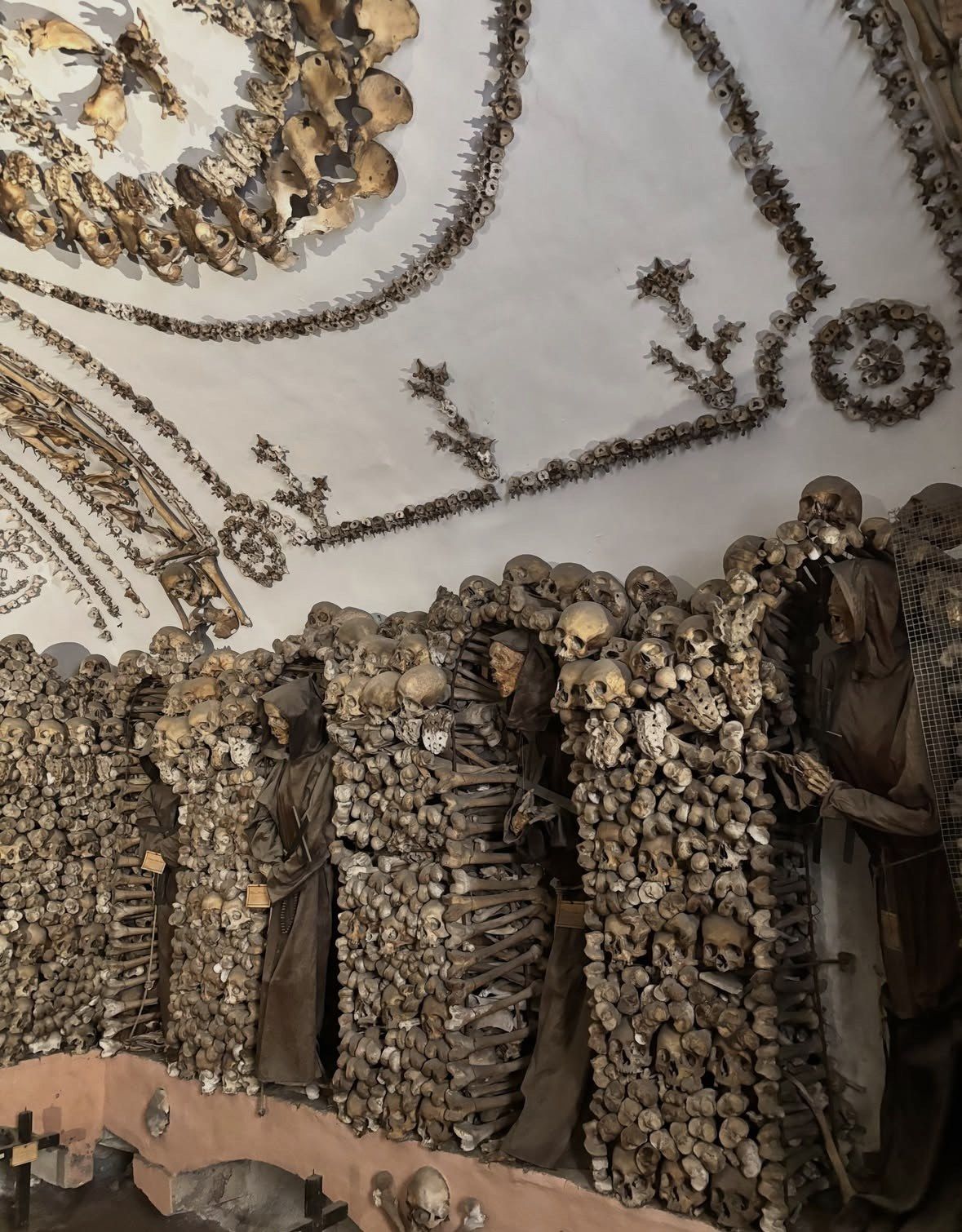
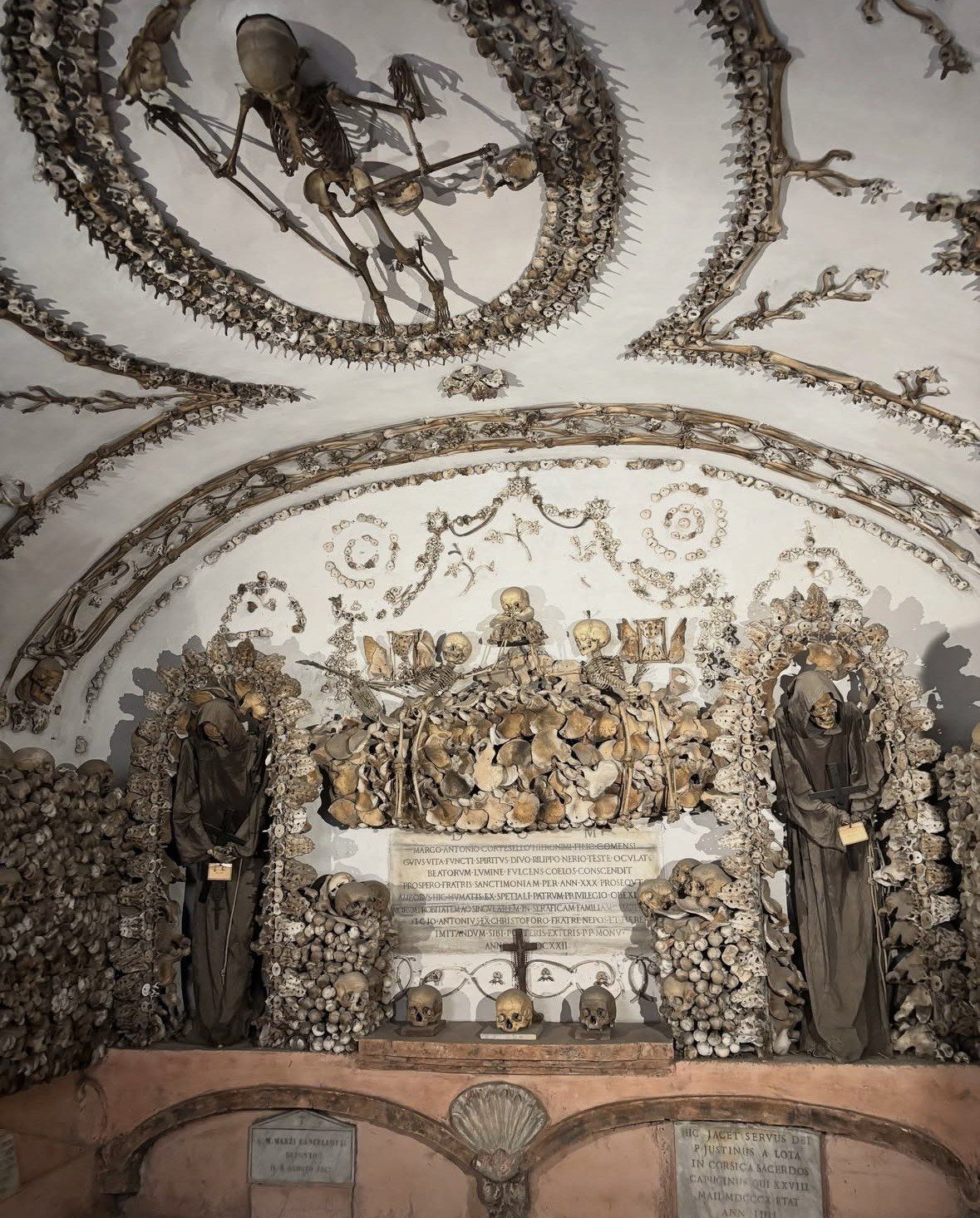
- The Capuchin Crypt, Via Vittorio Veneto 27: not a catacomb, but in the centre and bundled into several tours
Travel time from the historic centre
The Appia cluster is suburban rather than remote. From the centre the simplest public route is one metro leg plus one bus: Metro B to Colosseo or Circo Massimo, then bus 118 towards Appia and Villa dei Quintili, which has a stop called Catacombe di San Callisto. Metro A to San Giovanni with bus 218 towards Ardeatina to the Fosse Ardeatine stop is the fallback, while bus 714 to Navigatori leaves about a kilometre on foot along Via delle Sette Chiese.
Nothing here involves a train, a regional ticket or a day trip. What it does involve is the gap between city pavement and open countryside: beyond the walls the Appia runs between field walls and umbrella pines, and the regional park's walking and cycling itineraries cover more than 16 km of it. Priscilla asks for the same kind of effort in the other direction, with a 15-minute walk from the metro at the end. Full line details and parking notes sit on the transport and directions page on this site.
Catacomb and bone crypt, transfers from Piazza Barberini
If the distance out to the Appia is what is putting you off, this 3.5-hour outing starts at the Tritone fountain in the centre, moves you by private air-conditioned coach and adds the Capuchin Crypt and Museum, from €49, rated 4.6 (5439 reviews).
★ 4.6/5 · 5,439 reviews
Going out to the gates yourself, or being collected in the centre
Buses reach the Appia gates well, and on Sundays and public holidays the first stretch past the Maxentius complex is closed to ordinary traffic, which is when the road is at its best for walking and cycling. Private vehicles are banned from the Via Appia Antica on public holidays, so driving to the gates is not an option on exactly the dates when most visitors are free; drivers on other days leave the GRA at exit 24, signposted Roma centro and Fosse Ardeatine, for the parking area at Via Ardeatina 174.
If you would rather not work out connections twice in a day, three tours on this site handle the transfers for you. The Original Roman Crypts and Catacombs Tour with Transfers runs 3.5 hours from €49, rated 4.6 (5439 reviews), with a private air-conditioned coach from Piazza Barberini at the Tritone fountain and the Capuchin Crypt and Museum in the same outing. The Rome Catacombs & Capuchin Crypts Group Tour with Transfers is also 3.5 hours, from €57, rated 4.6 (991 reviews), meeting in front of the Fontana del Tritone and taking in St Callixtus, St Sebastian or Domitilla with a drive past the Appian Way and views of the Aurelian Walls.
For the shortest version of the trip, the Private Tour of Catacombs and Ancient Appian Way collects you at your hotel and brings you back, 2.5 hours, from €158, rated 4.4 (128 reviews), with private transport, tickets and an English-speaking driver. Pick it if you have small children, a tight slot in the day or no appetite for bus timetables. Note that the guided visit inside the catacomb is run by the site's own staff in every case, since nobody walks the galleries unaccompanied.
Questions people ask
Is the Capuchin Crypt one of the catacombs?
No. Its address is Via Vittorio Veneto 27, under the church of Santa Maria della Concezione, which puts it inside the centre instead of out on a consular road, and the remains kept there are those of almost 4,000 friars who lived between 1500 and 1800. It is an ossuary rather than an ancient burial gallery, and it is included in two of the tours listed here. Access is easy: three low steps, with the museum above reached by lift.
Can I visit the Jewish catacombs on the Via Appia Antica?
Only occasionally. Roma Capitale's tourism listing states that Vigna Randanini, at Via Appia Antica 119, opens only on special occasions, so it is not something to build a day around. The second Jewish site, in the Villa Torlonia grounds at Via Nomentana 70, is closed to visitors altogether. Both sit on roads you may pass on the way to other sites.
Can I walk or cycle between the catacomb entrances?
Yes, and the regional park describes its walking and cycling itineraries, covering more than 16 km, as always passable. On the surviving Roman basolato cyclists must dismount and push or use the dirt paths alongside. Riders linking the aqueducts to the Appia gates can use the private road of the San Callisto catacombs, open daily 9:00 to 18:00 except Wednesdays and throughout February.
Do I need to reserve before travelling out to a gate?
Entry is always on an accompanied visit with the staff of the site, as no one is allowed into the galleries alone. The official San Callisto site states that online reservation is required, and Priscilla asks everyone in the party to book, with each group capped at 25 people. Check the site's own pages for the current arrangement before you set out.
Which above-ground landmarks tell me I am in the right place?
Coming out of Porta San Sebastiano, the church of Domine Quo Vadis at Via Appia Antica 51 marks the junction with the Via Ardeatina, roughly 800 metres from the gate. Past it the ancient paving begins and the catacomb entrances follow, with the Villa and Circus of Maxentius and then the Mausoleum of Cecilia Metella at the third mile further south. The Fosse Ardeatine bus stop puts you on the Ardeatina side of the same cluster.
Read also