In shortThe Catacombs of Domitilla, on the Via Ardeatina, date from 120 AD and run to 17 km of tunnels on four levels. Most of the visit is spent inside the basilica of Nereus, Achilleus and St Petronilla, built half below ground in a form repeated nowhere else in Rome. The site opens every day except Tuesday, 9:00 to 12:00 and 14:00 to 17:00, with the last accompanied visit of each session starting 20 minutes before closing, in five languages plus Polish and Portuguese on request.
120 ADDate of the earliest galleries
17 kmTunnels on four levels
5 + 2Tour languages, two on request
TuesdayWeekly closing day
What the Catacombs of Domitilla are, and who looks after them
The date is the fact that places this complex. The official site gives 120 AD for the origins of the cemetery, which puts these galleries among the earliest Christian burial grounds in the city. The network grew to 17 km of tunnels on four levels, so the extent matches its better-known neighbours on the Appia strip.
The Missionaries of the Society of the Divine Word look after the site on behalf of the Pontifical Commission for Sacred Archaeology, the body that governs and conserves Rome's catacombs. Seven Rome catacombs appear on the Commission's list of those open to the public. Only three of the seven, San Callisto, San Sebastiano and this one, sit on the Appia Antica and Ardeatina side of the city, which is why they turn up on the same half-day itineraries.
Two things single Domitilla out. It is the only semi-underground basilica site in Rome, a church dedicated to Nereus, Achilleus and St Petronilla that you walk into rather than peer along, and it runs the widest range of tour languages of the three Appia complexes. If either matters to your group, pick this site over the other two.
The Domitilla underground basilica and what to see on the route
The basilica is a three-nave church at semi-underground level, and most of the visit happens inside it. Nereus and Achilleus, the two soldier-martyrs it commemorates, were probably put to death in Diocletian's persecution of 304 AD, and St Petronilla shares the dedication. The official description calls the space roomy, a word that fits little else underground in Rome.
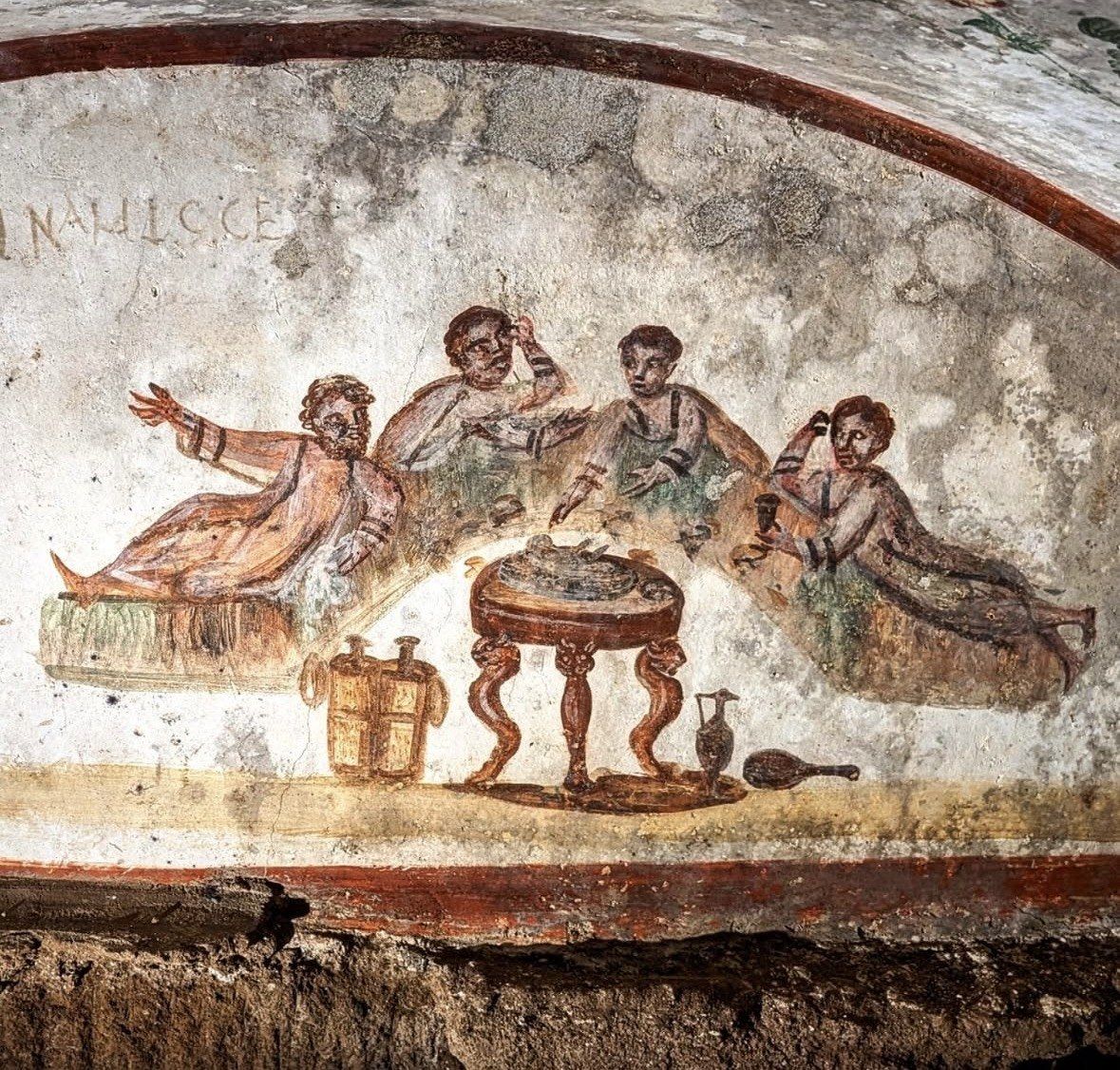
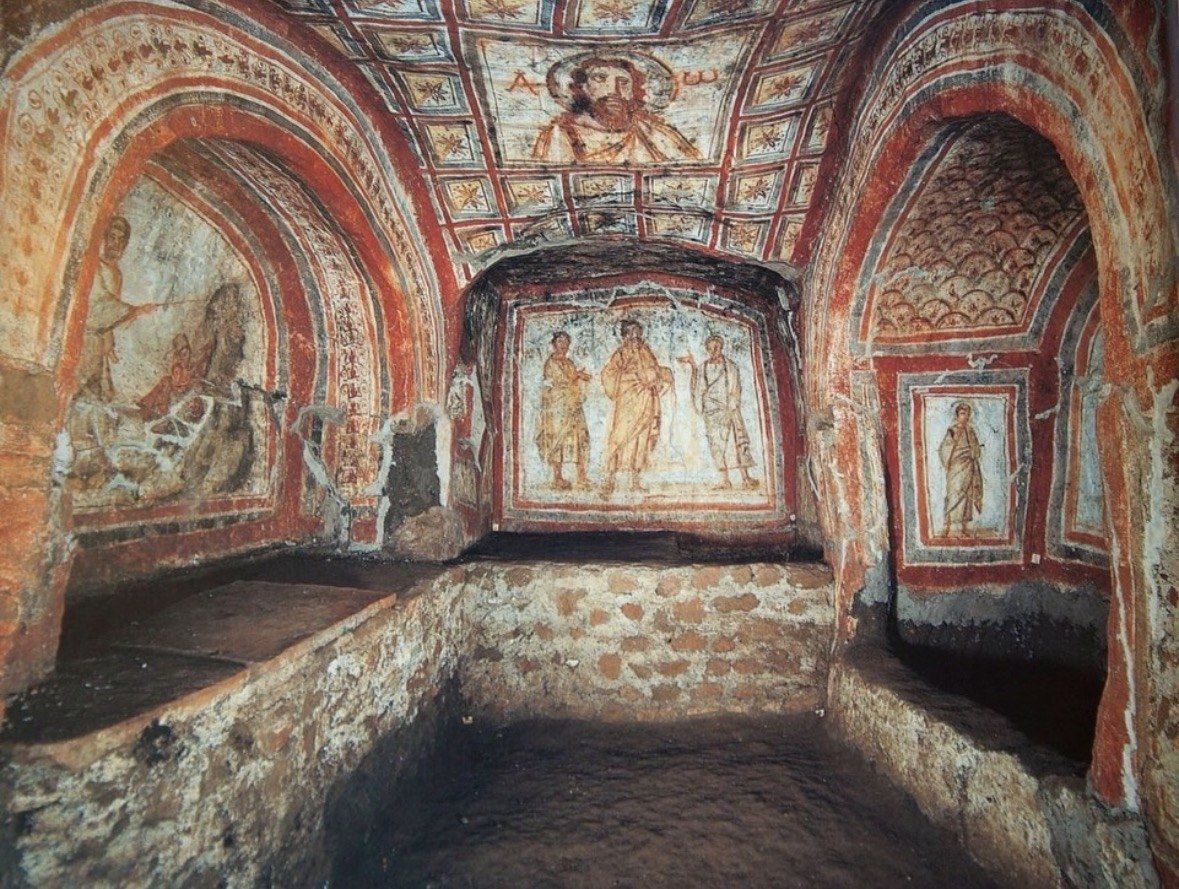
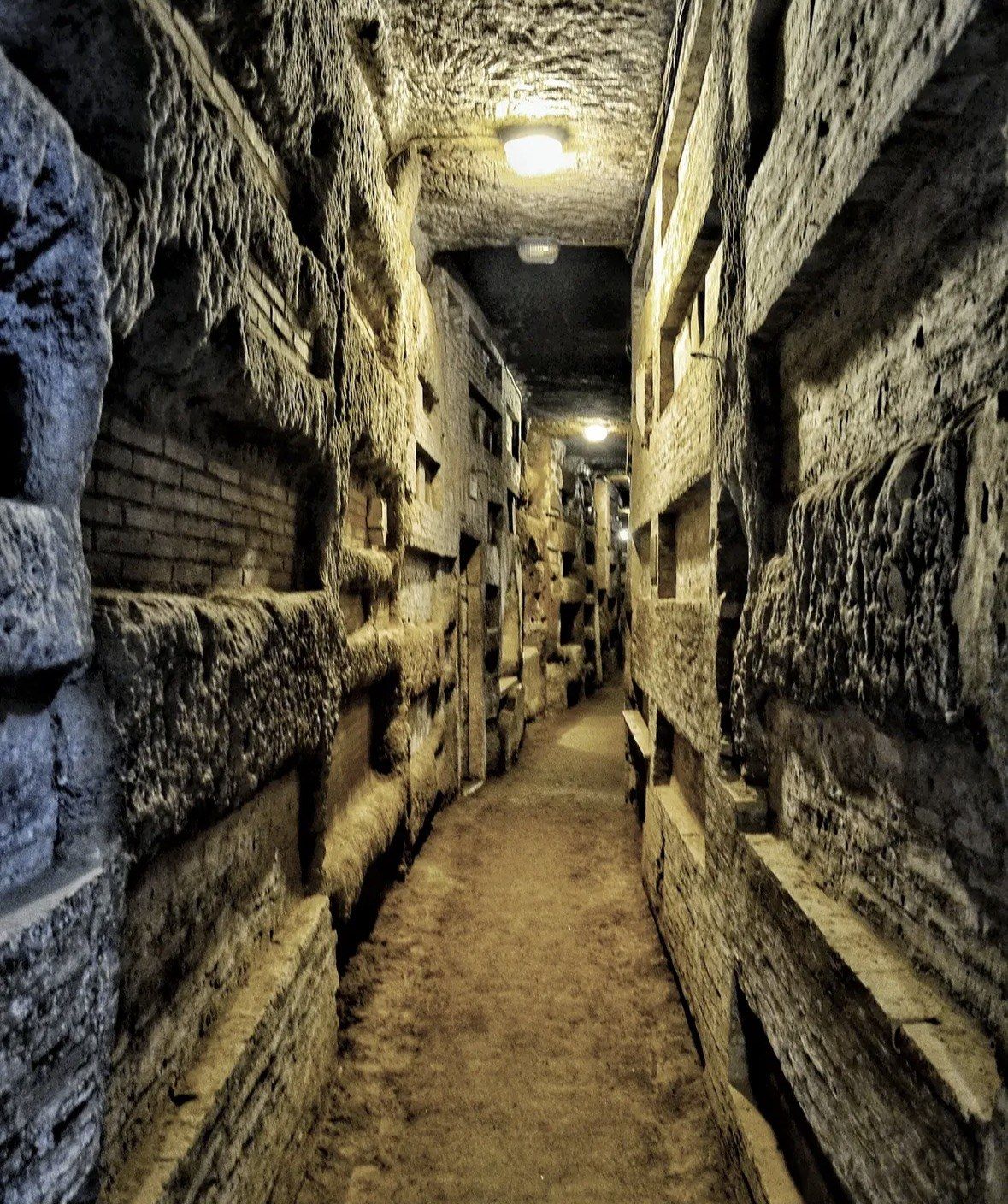
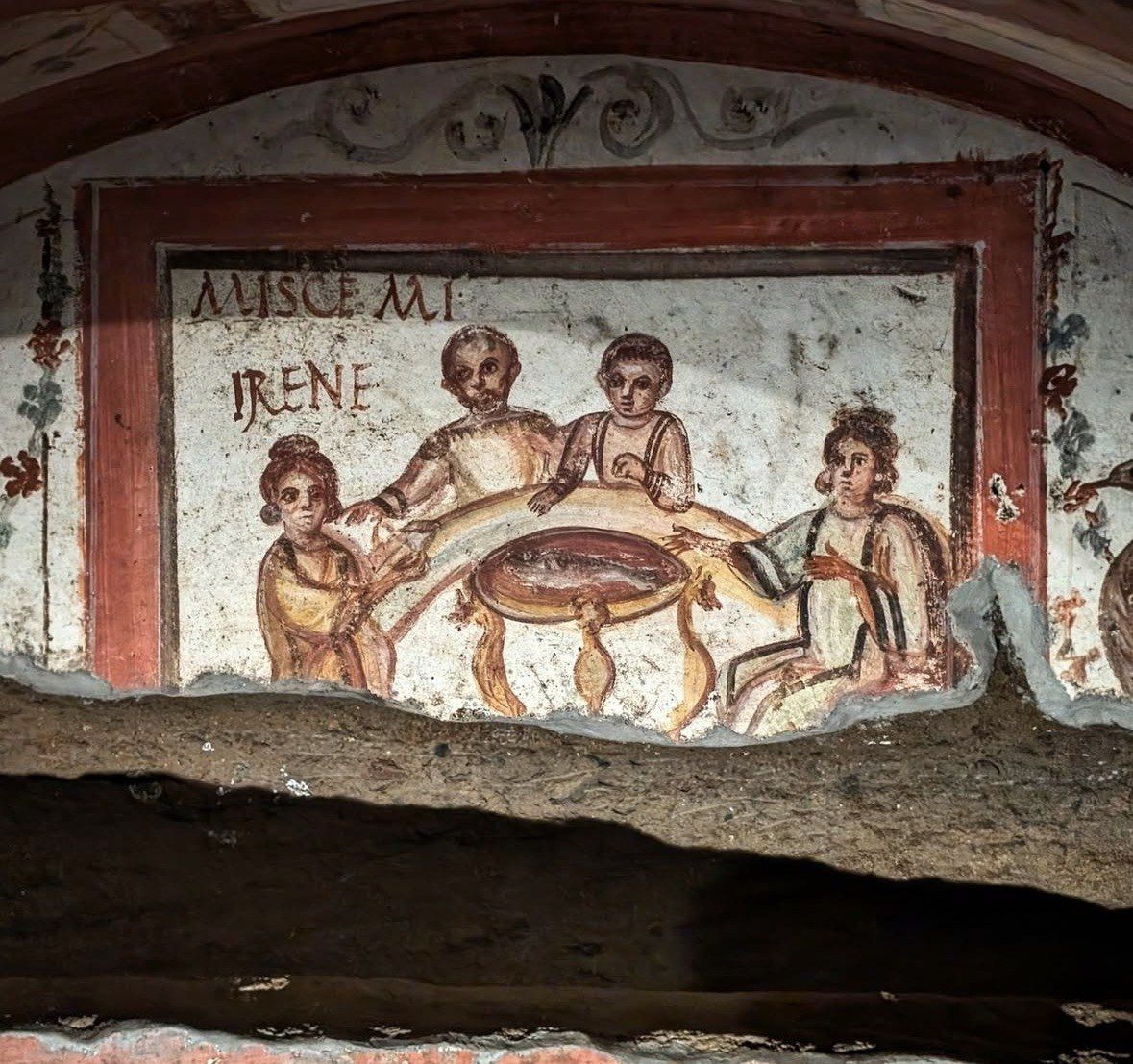
From there the accompanied route moves into the galleries. Burials along them follow the standard forms described by the Pontifical Commission: loculi cut lengthwise into the walls and closed with marble slabs or bricks, with arcosolia and painted cubicula as the other tomb types. The earliest layers belong to the 120 AD cemetery. Within a short stretch you pass a family burial chamber of Roman type, then chambers named for the Christians buried in them, and you can read the shift in funerary practice in the stonework itself.
- The semi-underground three-nave basilica of Nereus and Achilleus, also dedicated to St Petronilla
- The Flavian Hypogeum, the family burial chamber on the route
- The cubicle of Veneranda
- The arcosolium of the Little Apostles
- The cubicle of the gravedigger Diogenes
Catacomb and bone crypt in one half-day, with transfers
Rated 4.6 ★ (5439 reviews), the Original Roman Crypts and Catacombs Tour with Transfers fills 3.5 hours and starts from €49. It covers a Rome catacombs entrance ticket, the Capuchin Crypt and Museum, an English-speaking guide and a coach from the Tritone fountain. If the basilica is your reason for going, ask the operator which catacomb falls on your date.
★ 4.6/5 · 5,439 reviews
Tour languages, including the two available on request
Five languages are scheduled here as standard, Italian, English, German, Spanish and French, and the site adds Polish and Portuguese when they are asked for. No other catacomb on the Appia Antica publishes a list that long. Treat the last two as what they are called: ask for them when you arrange the visit, because a Polish or Portuguese group will not simply be assembled at the gate on the morning you turn up.
Elsewhere the picture is thinner. San Sebastiano publishes only that its last English tour begins at 16:45, and San Callisto's hours and tickets pages say nothing about which language runs when. If your group follows German or French comfortably and English not at all, that guesswork disappears here.
Opening days, the midday break and the last visit of each session
The gate opens every day except Tuesday, in two sessions: 9:00 to 12:00 and 14:00 to 17:00. The last accompanied visit of each session starts 20 minutes before that session closes, which makes 9:00 and 14:00 the arrival times that work, and the middle of the day dead time at this address. Catacomb timetables do move from one season to the next, so check on the day you plan to go.
Reckon on 40 to 45 minutes below ground, the length published for accompanied visits at the neighbouring Appia Antica sites. Take the morning slot if you can. That leaves the afternoon for the surface monuments, which run on the archaeological park's own hours and close on Mondays.
Closing days are staggered here and they catch people out. Tuesday is the day to avoid at Domitilla, Wednesday shuts San Callisto, Monday shuts San Sebastiano, Priscilla and the park sites. Thursday to Saturday clears all of them.
| Session | Opens | Last accompanied visit starts | Closes |
|---|
| Morning | 9:00 | 20 minutes before closing (11:40) | 12:00 |
|---|
| Afternoon | 14:00 | 20 minutes before closing (16:40) | 17:00 |
|---|
Steps, tight spaces and the semi-underground entry level
The semi-underground basilica is why this site reads as gentler than the others. A good part of the visit happens in an open three-nave space instead of a single-file corridor, which is worth knowing if narrow places make you uneasy. Domitilla publishes no step count. For a yardstick, use the neighbours: San Callisto counts about 50 uneven steps down and 50 back up, San Sebastiano about 70, and neither has a lift or anywhere to sit along the way. Expect stairs of the same kind in the galleries here.
Architectural barriers keep wheelchairs out at San Callisto and San Sebastiano, as the regulations each site publishes make clear, and both of them warn off visitors with serious mobility problems or claustrophobia. Strollers and bulky luggage are refused inside, and nobody leaves the group once below ground. If that rules someone out, send the rest of the party underground and read the access page and the page on underground conditions on this site before you commit. Someone who cannot face the stairs at all can take the Capuchin Crypt in the centre instead, which is at street level and open daily 09:30 to 13:30 and 14:30 to 18:30, the last entries falling at 12:30 and 17:30.
Bring a layer whatever the month. San Callisto publishes around 16 °C with high humidity year-round and asks for clothing suited to a cold, damp place even in August. Standing still for forty minutes makes it feel colder still.
Questions people ask
Can I walk the Domitilla galleries on my own?
No. Nobody goes into the Ardeatina galleries unaccompanied: as at every catacomb open in Rome, you go down with a member of the site's own staff and stay with that group until you come back up. The price of entry at Domitilla already includes that guided visit, and the tours on this site add transport and a second stop on top of it.
Are the Polish and Portuguese tours guaranteed?
They are listed as available on request, unlike Italian, English, German, Spanish and French, which the site runs as standard. Arrange them in advance instead of turning up and hoping. If nothing can be confirmed, the English visit is the fallback at any of the three Appia complexes.
Does Domitilla close for a long period in winter?
What the operator's own site carries is an old notice, a closure running 24 December to 21 January, with no dates announced for the winter ahead. Treat late December and January as uncertain, and keep a second site in reserve, bearing in mind that San Callisto is shut 13 January to 10 February 2027 and Priscilla 11 January to 1 February 2027.
How does Domitilla compare in size with San Callisto and San Sebastiano?
The figures here are 17 km of tunnels spread over four levels. San Callisto outsizes that: about 19 km of galleries across roughly 90 acres, four levels again but reaching more than 20 metres down, with 16 popes and an estimated half a million burials. San Sebastiano has about 12 km on three levels reaching 18 metres. Size says little about the route itself, and at Domitilla the route is built around the basilica.
Is one catacomb enough, or should I visit two?
One is enough. The accompanied visits all run about 40 to 45 minutes through galleries of broadly similar type, so a second complex gives you diminishing returns. Spend the remaining time on the surface, where the Appian Way monuments belong to a separate archaeological park with its own hours, Tuesday to Sunday, and its own ticket.
Read also