In shortYour shortlist runs to seven, because that is how many Rome catacombs the Pontifical Commission for Sacred Archaeology admits the public to: San Pancrazio, Priscilla, San Sebastiano, Domitilla, Sant'Agnese, San Callisto and Santi Marcellino e Pietro. San Callisto is the one to start with on a first visit: the biggest, about 19 km of galleries on four levels, with the Crypt of the Popes. San Sebastiano has the apostolic graffiti, Domitilla a semi-underground basilica, Priscilla the earliest image of the Virgin.
7catacombs open to the public
19 kmgalleries at San Callisto
17 kmtunnels at Domitilla
230–240oldest Virgin image, Priscilla
The seven catacombs you can visit in Rome
Public access is limited to seven sites, and the Pontifical Commission for Sacred Archaeology's own list reads San Pancrazio, Priscilla, San Sebastiano, Domitilla, Sant'Agnese, San Callisto, Santi Marcellino e Pietro. Three are on the Via Appia Antica strip, two north of the centre on Via Salaria and Via Nomentana, one on the Janiculum, one out on Via Casilina.
Two of the seven are hard to fit into a holiday. San Pancrazio opens on Tuesday and Thursday mornings with one Wednesday afternoon slot, closes Friday to Monday, shuts for the whole of August, and shows only one of its four original regions, the stretch under the basilica's central nave. Santi Marcellino e Pietro has to be booked ahead, closes on Thursdays, and moves its afternoon hours with the season. The Jewish catacombs never appear on the Commission's list: Vigna Randanini opens only on special occasions, and the Villa Torlonia hypogeum is closed to visitors entirely.
- San Callisto, Via Appia Antica strip, closed Wednesdays, two sessions with a 12:00 to 14:00 break
- San Sebastiano, same strip, closed Mondays, open continuously from 09:15 with last admission at 16:45
- Domitilla, a few minutes further along the same strip, takes Tuesday as its closing day and works 9:00 to 12:00 then 14:00 to 17:00
- Priscilla, Via Salaria, closed Mondays, 9:30 to 13:00 and 14:00 to 17:00, Sunday mornings from 11:30
- Sant'Agnese, out on Via Nomentana, takes visitors Monday to Saturday only, on 30-minute visits leaving each hour from 10:00 to 12:00 and again from 15:00 to 17:00
- San Pancrazio, Janiculum, three mornings and one afternoon a week, closed all August
- Santi Marcellino e Pietro, Via Casilina, closed Thursdays, advance booking required
The best catacombs to visit in Rome, site by site
For most people the best catacombs to visit in Rome come down to four names, and the choice gets easier once you know what each site is built around.
San Callisto is the largest complex on the Appia: roughly 90 acres of ground, about 19 km (12 miles) of galleries stacked on four levels, the lowest of them more than 20 metres under the fields. It started in the middle of the second century and served as the official cemetery of the Church of Rome in the third, with an estimated half a million burials, dozens of martyrs and 16 popes. The accompanied route goes first to the Crypt of the Popes, nicknamed the little Vatican because nine popes were buried in it and the Greek inscriptions of Pontianus, Antherus, Fabian, Lucius and Eutychian are still legible on its walls; the Crypt of St Cecilia comes next, with its copy of Maderno's statue of 1599. Reception and the visits have been in the hands of the Salesians of Don Bosco since 1930. Each group spends about 40 minutes underground, departures leave every half hour, and the last morning one goes at 12:00.
The word catacomb came into the world from San Sebastiano, out of the pozzolana quarry called ad catacumbas above it. Roughly 12 km of tunnels run on three levels down to 18 metres, and the deepest part takes in a second-century pagan necropolis with three mausoleums. The triclia, a covered hall lined with benches, and the Memoria Apostolorum beside it exist nowhere else: pilgrims scratched invocations there, among them Paule et Petre petite pro Victore, and many scholars think the apostles' remains lay here for a time. Franciscans have been on the site 200 years, visits run 40 to 45 minutes, and the doors stay open through the middle of the day, Tuesday to Sunday, until 17:15.
Domitilla goes back to 120 AD, which puts it among the earliest Christian burial complexes in the city, and it runs to 17 km of tunnels on four levels. The route, though, is built around the semi-underground three-nave basilica of Nereus and Achilleus, two soldier-martyrs probably killed in Diocletian's persecution of 304 and commemorated here together with St Petronilla. No other Roman catacomb has a church of that kind inside it. After the basilica your group is walked through four more set pieces: the Flavian Hypogeum, Veneranda's cubicle, the arcosolium of the Little Apostles and the chamber of Diogenes, who dug graves here for a living. Care of the site rests with the Missionaries of the Society of the Divine Word, on the Commission's behalf, and they publish the widest language range of the Appia sites: Italian, English, German, Spanish and French, with Polish and Portuguese on request.
Priscilla sits away from the Appia, out on Via Salaria north of the centre. Over 13 km of galleries run on two levels, the fewest of the main open sites, and the air inside holds at about 13°C. Seven popes lie there, Sylvester among them, elected in 314, his tomb under the excavated foundations of the basilica of San Silvestro. The route takes in the Cubicolo della Velata, the cryptoporticus, the Greek Chapel with its Susanna, Adoration of the Magi and Fractio panis panels, and the painting of about 230 to 240 called the oldest known depiction of the Virgin. Visits last about 45 minutes, groups are capped at 25 people, and the Associazione Pro Deo et Fratribus, Famiglia di Maria looks after them.
| Site | Scale | Headline feature | Accompanied visits run by | Where | Visit length |
|---|
| San Callisto | 4 levels, about 19 km of galleries, over 20 m deep, roughly 90 acres | Crypt of the Popes, nine popes buried, then the Crypt of St Cecilia | Salesians of Don Bosco, since 1930 | Via Appia Antica strip, south of the centre | About 40 minutes, departures every 30 minutes |
|---|
| San Sebastiano | 3 levels, about 12 km, down to 18 m | Triclia and the Memoria Apostolorum with pilgrim graffiti to Peter and Paul | Franciscans, 200 years on the site | Same Appia strip | About 40 to 45 minutes |
|---|
| Domitilla | 4 levels, 17 km of tunnels, origins in 120 AD | Rome's only semi-underground basilica, for Nereus, Achilleus and St Petronilla | Missionaries of the Society of the Divine Word | Same Appia strip | Not published; the last tour of each session starts 20 minutes before it closes |
|---|
| Priscilla | 2 levels, over 13 km, interior about 13°C | Oldest known image of the Virgin, about 230 to 240, and the Greek Chapel frescoes | Associazione Pro Deo et Fratribus, Famiglia di Maria | Via Salaria, north of the centre | About 45 minutes, groups capped at 25 |
|---|
San Sebastiano or Domitilla with the Appia above it
This 3.5-hour tour settles the closing-day problem for you: entry to San Sebastiano or Domitilla depending on the date, with the aqueducts and a walked stretch of the Appian Way, from €55, rated 4.8 ★ (1691 reviews).
★ 4.8/5 · 1,691 reviews
Two sites in one day, and the days that rule them out
One pairing works without dead time: San Callisto at 09:00, then San Sebastiano. San Callisto sends its last morning group off at 12:00 and reopens at 14:00, while San Sebastiano admits visitors straight through the middle of the day, so you can walk down the Appia and be underground again by half past twelve. Domitilla keeps San Callisto's two sessions, so pairing those means a first departure at one site, the 14:00 session at the other and two hours to fill above ground.
Closing days decide the plan more than opening hours do, because they deliberately fail to line up. Pick the day first, then the sites.
Priscilla does not combine comfortably with anything on the Appia. It stands on the other side of the city, it breaks for lunch as well, and on Sundays its morning session only starts at 11:30, so treat it as a half-day of its own. Diminishing returns are real with two catacombs in a day: all four are accompanied walks through broadly similar galleries, none of them lasting an hour. One catacomb plus the surface monuments of the Appia Antica, the Maxentius complex and the Mausoleum of Cecilia Metella at the third mile, makes a fuller day. The park sites run on their own clock, Tuesday to Sunday, 9:00 to 19:15 from April to September and 9:00 to 16:30 from November to the end of February.
- Monday: San Sebastiano and Priscilla are shut, so it is a San Callisto plus Domitilla day
- Tuesday: Domitilla is shut, leaving San Callisto with San Sebastiano
- Wednesday: San Callisto is shut, leaving San Sebastiano with Domitilla
- Thursday to Saturday: all three Appia sites open, the easiest window for any combination
- Sunday: the Appia sites work, Priscilla starts at 11:30 and Sant'Agnese runs no visits
Choosing by what you want to see underground
Default to San Callisto for a first visit. It is the biggest and best known of the four, and the Crypt of the Popes gives you the scale of the third-century Church of Rome in one chamber. Reckon on about 50 irregular steps down and 50 back up, no lift and nowhere to sit.
San Sebastiano suits a day with a midday hole in it, and it holds the one sight no other site can show you. The pilgrim graffiti in the Memoria Apostolorum was scratched by hand into the plaster by people who came to pray at the spot, and it reads very differently from a gallery of sealed loculi. The route works out at roughly 70 irregular steps in each direction, the steepest of the four.
Choose Domitilla if you need German, Spanish, French, Polish or Portuguese, or if headroom matters more than numbers: the semi-underground basilica is the roomiest space on any of these routes. Priscilla is for a second visit, or for anyone who came for the painting: the Greek Chapel panels, the Cubicolo della Velata and the earliest Marian image, in galleries that see far fewer visitors and sit about three degrees cooler.
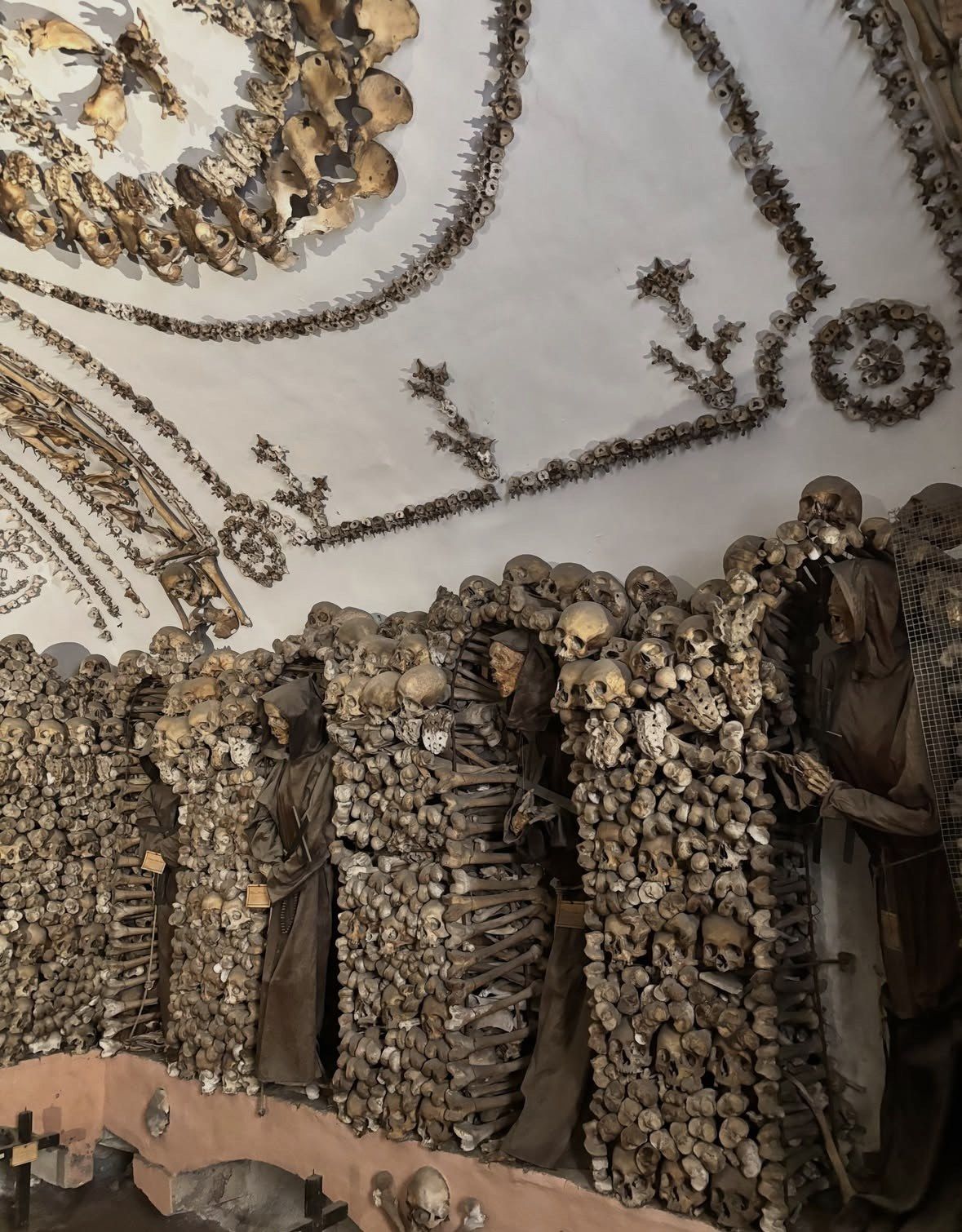
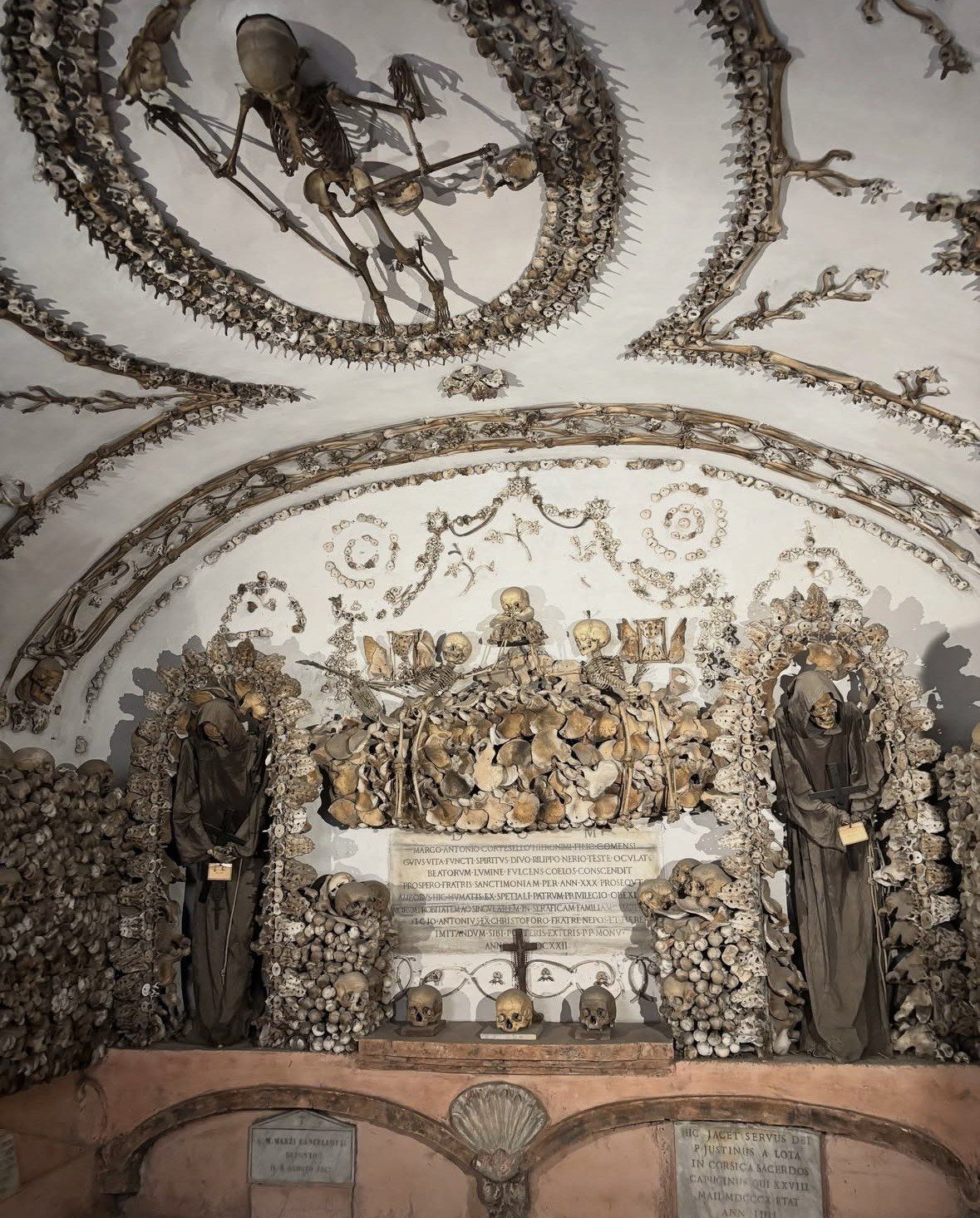
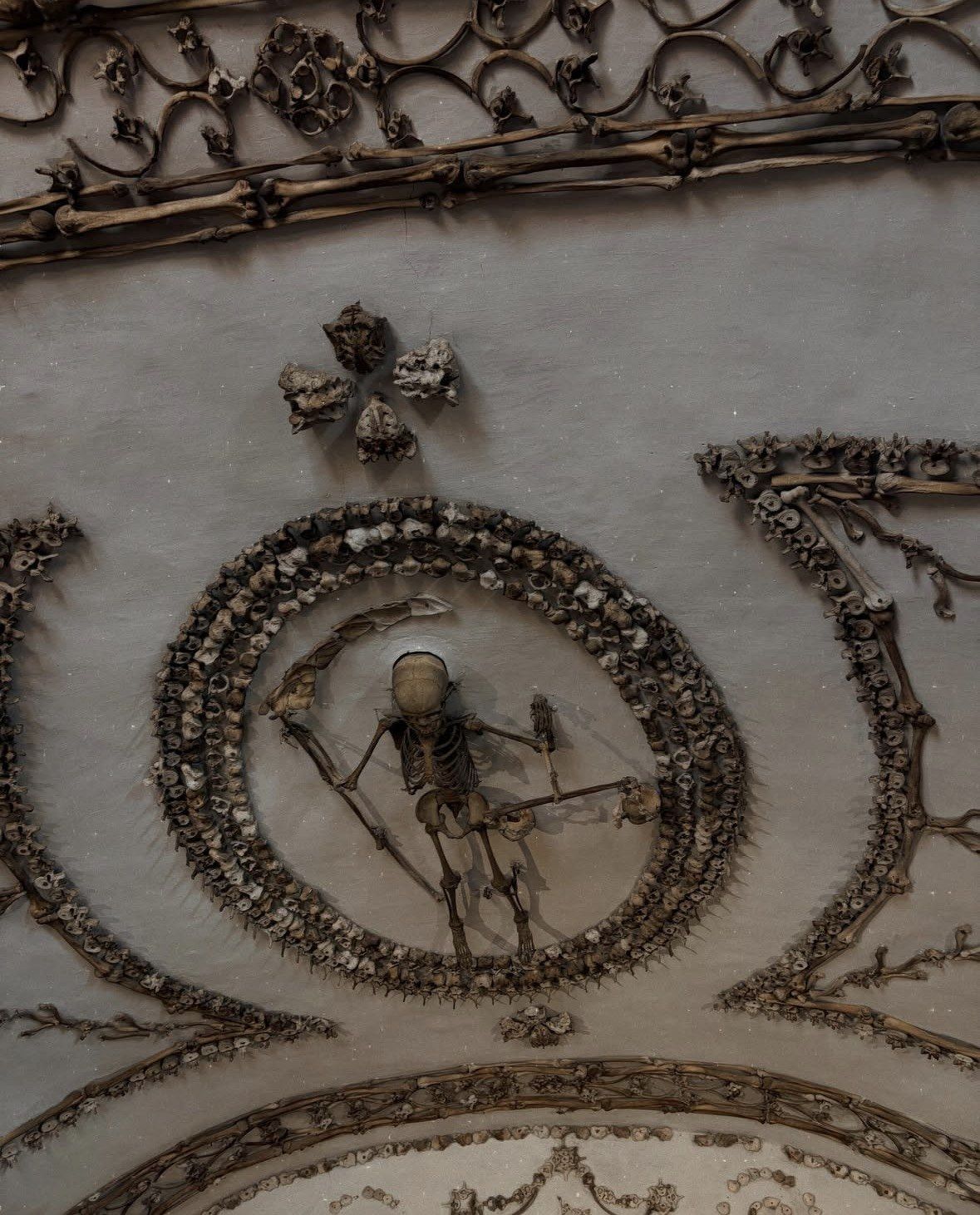
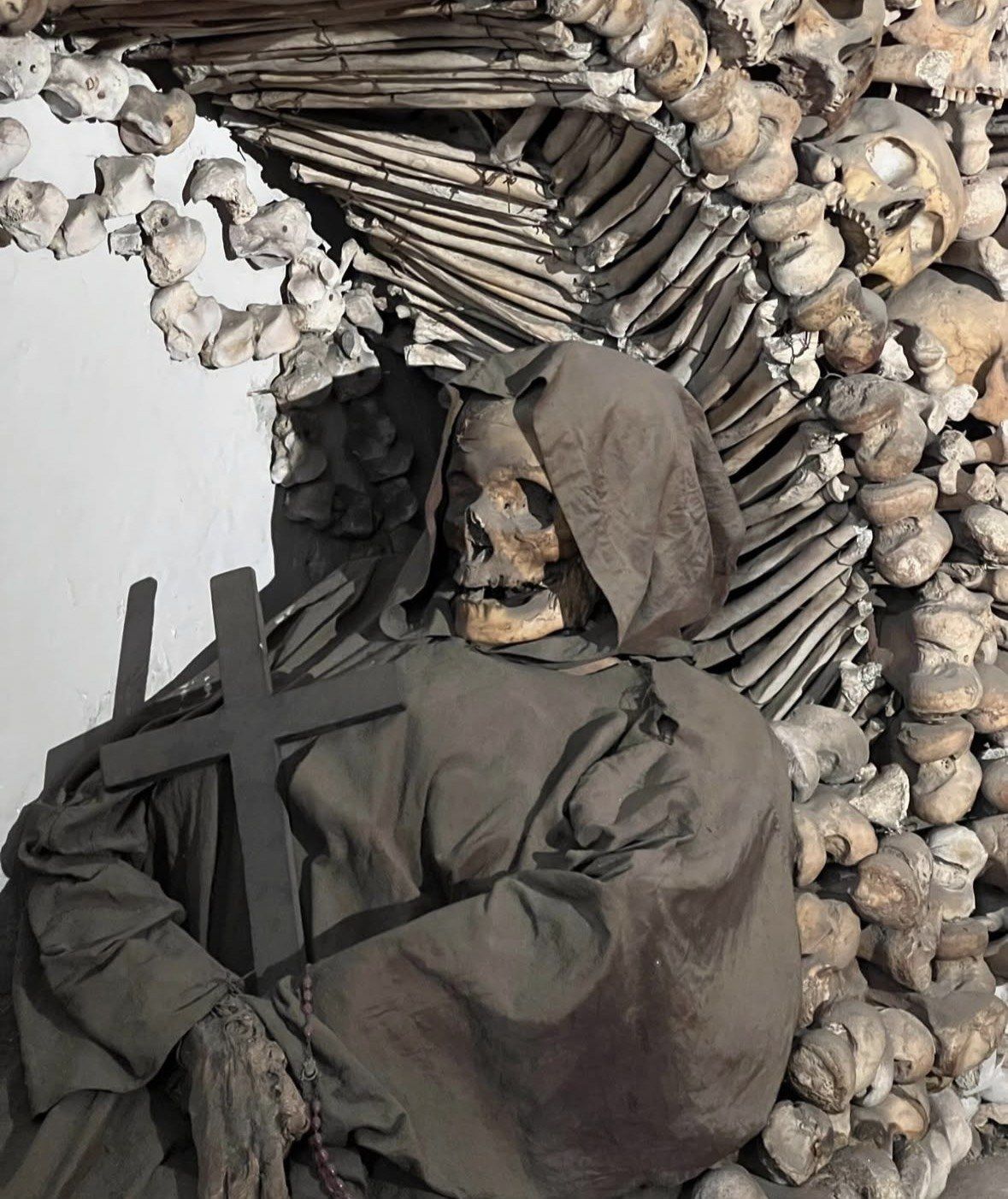
Anyone in the party who uses a wheelchair, pushes a stroller, has bad knees or struggles in tight spaces should stay out of all four. The official San Callisto regulations state that wheelchairs cannot be taken in because of the monument's architectural barriers, and they advise against the visit for anyone with serious mobility problems or claustrophobia; San Sebastiano says the same, and strollers and bulky bags are turned away at the entrance. The Capuchin Crypt under Santa Maria della Concezione, at Via Vittorio Veneto 27, is the sensible substitute: three low steps and no ramps, with the museum above it reached by lift, open every day 09:30 to 13:30 and 14:30 to 18:30, last entries at 12:30 and 17:30.
Matching each profile to a tour on this site
Rome Underground: Catacombs Tour, Aqueducts and Appian Way is the pick for the landscape as much as the galleries, in a group small enough to hear the guide: 3.5 hours, from €55, rated 4.8 ★ (1691 reviews), 18 people or fewer, private air-conditioned transport. It goes into San Sebastiano or Domitilla depending on the day, which sidesteps the staggered closing days, and adds the Roman aqueducts, a walked stretch of the Appia and the exterior of the Mausoleum of Cecilia Metella. The meeting point is in front of Piramide metro station, across from Piazzale Ostiense, 15 minutes before the start, with the guide holding a yellow sign.
Two underground stops in one outing means Rome Catacombs & Capuchin Crypts Group Tour with Transfers: 3.5 hours, from €57, rated 4.6 ★ (991 reviews), private round-trip transport from central Rome, a guided visit of St Callixtus, St Sebastian or Domitilla, and timed entry with an audio guide to the Capuchin Crypts, left out of the Catacombs Only version. The route drives past the Appian Way and takes in the Aurelian Walls. Arrive 10 minutes early at Piazza Barberini, in front of the Fontana del Tritone.
Repeat visitors and anyone after frescoes should plan Priscilla around its own timetable: buses 310, 92 and 63 stop at Priscilla, Metro B1 leaves about a quarter of an hour on foot, and groups are capped at 25, so you walk with a small party whichever day you pick.
Questions people ask
Which are the most impressive catacombs in Rome?
On numbers, San Callisto: four levels, about 19 km of galleries over roughly 90 acres, the lowest more than 20 metres down, half a million burials and 16 popes. On what you actually see, San Sebastiano's Memoria Apostolorum and Domitilla's semi-underground basilica stay with you longer than gallery length does. For painting, Priscilla wins among the four.
Which catacomb runs visits in languages other than English?
Domitilla publishes the widest range on the Appia Antica: Italian, English, German, Spanish and French, with Polish and Portuguese on request. The other sites do not publish a language timetable in the same detail, although San Sebastiano states that its last tour in English begins at 16:45. If the language matters, build the day around Domitilla and remember it closes on Tuesdays.
Can you walk through a catacomb on your own?
No. Entry is on an accompanied visit with the site's own staff and you stay with your group the whole time. Solo travellers should note that San Callisto will not send a group down with fewer than two people, while San Sebastiano cautions that a party below that number may have its visit put back. San Callisto also states that reservation is required before you turn up.
Are photographs allowed inside?
Neither San Callisto nor San Sebastiano lets you take pictures or film underground, and at San Callisto the published regulations give staff the right to turn out anyone who tries. Plan to put the phone away for the full 40 minutes or so underground. The Capuchin Crypt is the exception among the sites on this page, where photos are permitted for private, non-commercial use.
Is any catacomb open in the evening?
The regular sites all shut in the late afternoon: San Callisto and Domitilla at 17:00, San Sebastiano at 17:15 with last admission at 16:45, Priscilla's final tour at 16:00. Sant'Agnese on Via Nomentana runs hourly 30-minute visits only to 17:00, Monday to Saturday, with nothing on Sunday, and its martyr's gallery lies about six metres below the modern road.
Read also